
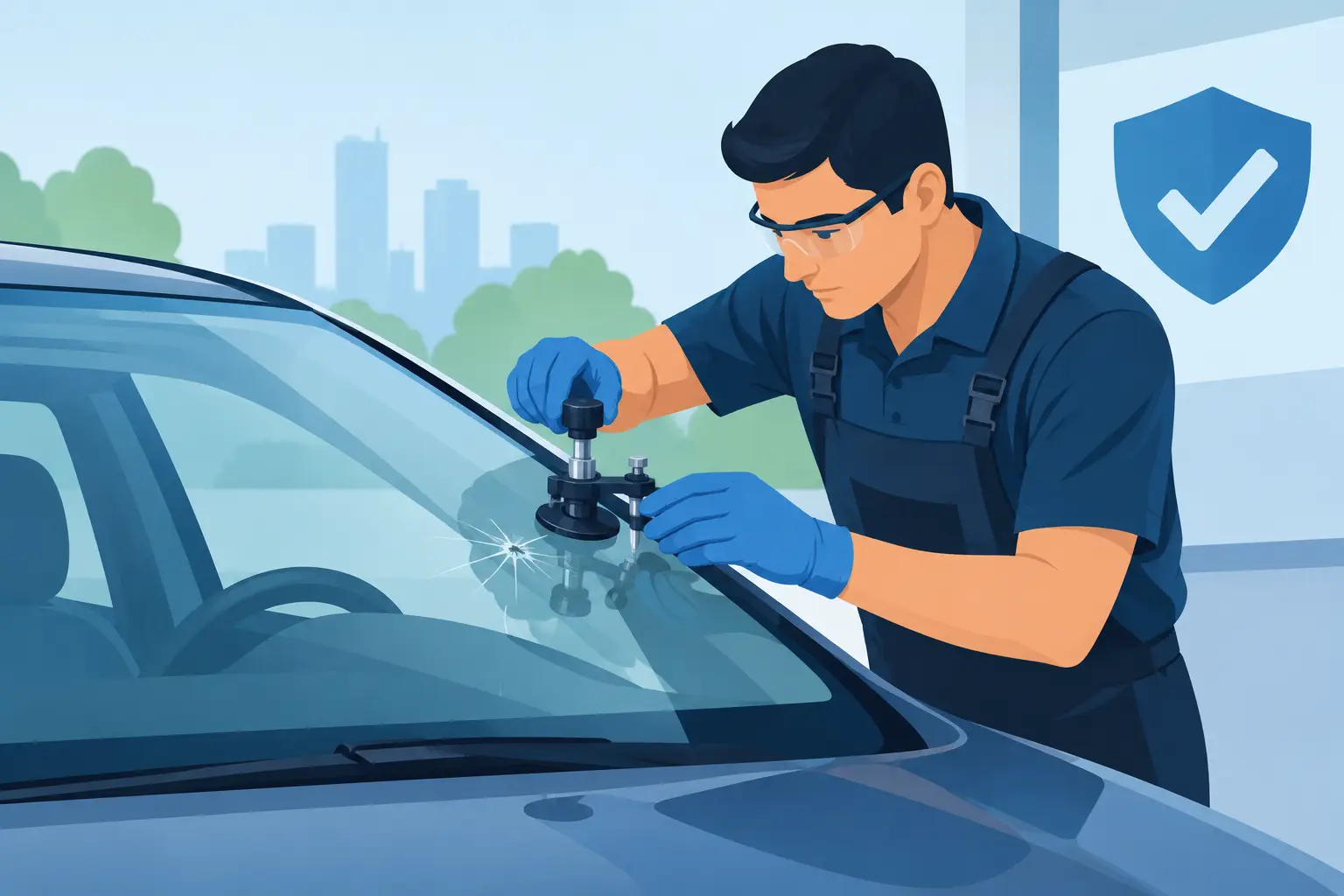
A rock chip on I-40 can look harmless at first. Then a cold Panhandle morning, a hard pothole, or a hot afternoon turns that small mark into a spreading crack across the driver’s line of sight. Auto glass repair is not just about making a windshield look better. It is about protecting the glass that supports your roof, helps your airbags work as designed, and gives cameras and sensors a clear view of the road.
For Amarillo drivers, waiting is often the expensive choice. A repairable chip can become a windshield replacement, and a windshield replacement on a newer vehicle may also require precise camera and sensor recalibration. The right next step depends on the damage, where it sits, and what safety technology your vehicle uses.
When Auto Glass Repair Can Save Your Windshield
Windshield repair is often the best option when damage is small, recent, and away from the driver’s direct viewing area. A trained technician removes moisture and air from the break, injects a specialized resin, and cures it to stabilize the damaged area. The goal is to stop the crack from spreading and restore as much strength and clarity as possible.
A repair may be a good fit for a rock chip, bullseye break, star break, or short crack. The exact answer is not based on size alone. Damage near the edge of the windshield can weaken the glass more quickly, and a break directly in front of the driver may still create visibility concerns even if the glass can be structurally stabilized.
Timing matters. Dirt, water, and road grime can work their way into an open chip, making a clean repair more difficult. Covering a chip with clear tape until it can be inspected may help keep contaminants out. Do not press on the damaged glass or try a home repair kit without understanding the risk. A poor repair can leave the break contaminated or make professional work less effective.
At Panhandle Auto Glass, GlasWeld-certified repair methods are used to evaluate and stabilize eligible windshield damage. That matters because the right repair is not a cosmetic patch. It is a controlled process meant to preserve safe, usable glass when replacement is not necessary.
When Windshield Replacement Is the Safer Call
Some damage should not be repaired. A crack that reaches the windshield edge, damage that penetrates both layers of laminated glass, or a break in the driver’s critical viewing area may call for replacement. So can extensive cracking, shattered glass, severe pitting, and damage that compromises the windshield’s fit or structural role.
The windshield is part of the vehicle’s safety system. In many vehicles, it helps support the roof during a rollover and provides a backing surface that allows the passenger-side airbag to deploy correctly. That is why the adhesive holding the windshield in place matters as much as the glass itself.
A proper replacement starts with glass that matches the vehicle’s specifications and a careful inspection of the pinch weld, molding, clips, and surrounding structure. The old urethane must be prepared correctly, and the new windshield must be bonded with the right adhesive procedure and allowed to reach its safe drive-away time. DuPont-certified adhesive procedures help ensure that the windshield is installed for safety, not simply set in place to get a vehicle out the door.
Cheap installation shortcuts can create problems that are not obvious from the driver’s seat. Improper bonding can lead to wind noise, water leaks, rust around the frame, and compromised crash protection. The lowest estimate is not always the lowest cost when the installation fails months later or leaves a safety system unreliable.
Modern Windshields Need More Than New Glass
If your vehicle has lane-departure warnings, forward-collision alerts, adaptive cruise control, automatic emergency braking, or traffic-sign recognition, your windshield may hold a forward-facing camera or support sensors that depend on its position. Replacing the glass can change the camera’s relationship to the road, even when the new windshield looks perfectly aligned.
That is why advanced driver-assistance system recalibration, often called ADAS recalibration, is a required part of many windshield replacements. The vehicle’s camera or sensor system must be checked and recalibrated according to manufacturer requirements so it can accurately recognize lane markings, vehicles, pedestrians, and distance.
Skipping recalibration is not a minor technical detail. A system that is out of alignment may give inaccurate warnings, react at the wrong time, or fail to respond when it should. Warning lights do not always tell the full story. The vehicle may appear normal while its driver-assistance features are not operating as intended.
There are different calibration methods, and the right one depends on the vehicle. Some require a controlled static setup with targets and precise measurements. Others require a road-based dynamic procedure. In certain cases, both are necessary. A qualified auto glass provider should identify the required process before the replacement begins, not treat calibration as an afterthought.
What Certified Work Looks Like
Auto glass work should be direct, clear, and accountable. Before approving service, ask whether the technician will inspect the damage, explain repair versus replacement, use quality glass and approved adhesives, and address ADAS recalibration when required. You should also know the safe drive-away time and what workmanship warranty protects the installation.
AGSC-certified installation expertise brings nationally recognized safety standards into the process. It reflects training in proper glass handling, vehicle preparation, adhesive application, and installation practices. Certifications do not replace careful work, but they show that a company takes the technical demands of the job seriously.
For Amarillo vehicle owners, local accountability is just as valuable. Calling a direct local team means you can speak with people who understand Panhandle roads, weather swings, and the daily demands placed on trucks, SUVs, work vehicles, and family cars. You should not have to work through a national call chain to get a straight answer about your vehicle.
Fast Service Should Not Mean Rushed Service
Same-day auto glass service can be the right solution for a broken side window, shattered back glass, or spreading windshield crack. It is especially important when a vehicle cannot be safely secured overnight or when a commercial vehicle is losing productive time. But fast service still has to follow the correct process.
A quality provider will clean out broken glass, protect the interior and door components, inspect window regulators when power windows fail, and verify that replacement glass operates and seals correctly. For fleet operators, that same attention helps prevent repeat downtime. A truck or service vehicle with compromised glass is not merely inconvenient - it can become a safety, security, and scheduling problem.
Insurance may cover windshield repair or replacement depending on your policy and deductible. Many claims can be handled with straightforward documentation, but you retain the right to choose the glass company that performs the work. Ask for help with the insurance process, then make the final decision based on qualifications, materials, calibration capability, and warranty coverage.
Protect the Glass Before the Damage Grows
Small habits can prevent a manageable issue from becoming an urgent one. Leave extra space behind gravel trucks, avoid slamming doors when a window is partially down, and do not blast a cracked windshield with extreme heat or cold. If a chip appears, arrange an inspection promptly rather than waiting to see whether it spreads.
If the damage blocks your view, reaches the windshield edge, leaves loose glass, or affects a vehicle with camera-based safety features, treat it as a safety concern. The right repair protects more than your line of sight. It helps keep the vehicle ready for the miles ahead, whether you are heading across Amarillo, out to a job site, or home to your family.